
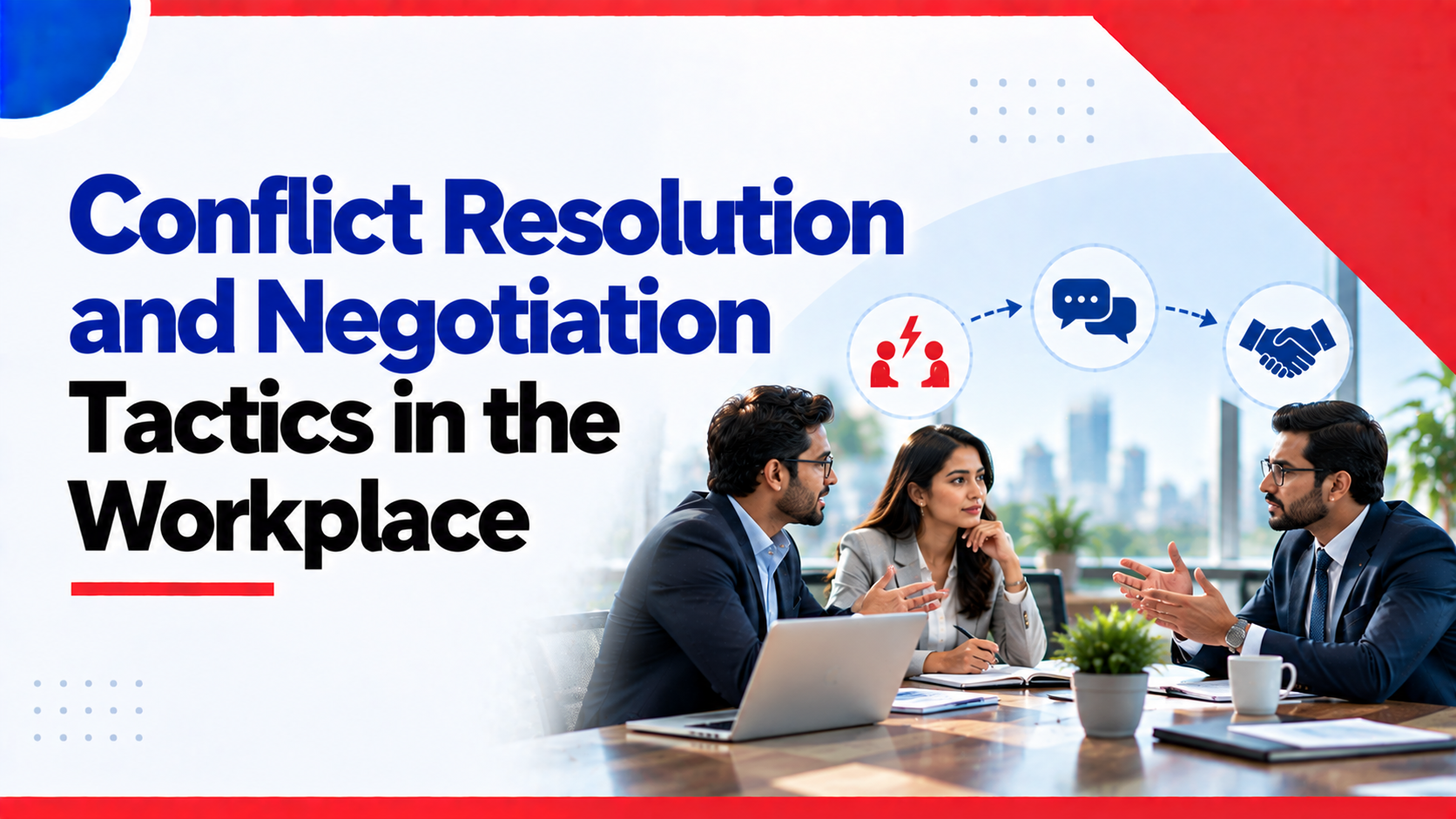
Workplace conflict occurs when two or more employees or groups have different opinions, interests, goals, values, or expectations. Conflict may arise between employees, between a manager and an employee, between departments, or between management and workers.
Conflict is not always harmful. A healthy disagreement can bring new ideas and help managers identify problems. However, when conflict is ignored or handled badly, it can reduce employee morale, teamwork, productivity, and job satisfaction.
Common Cause of Workplace Conflict
- Communication Problems – Misunderstood messages, incomplete information, or poor communication can create disagreements.
- Different Goals – Two departments may have different priorities. For example, sales may want quick delivery, while production may want more time.
- Limited Resources – Employees may compete for budgets, staff, equipment, or working space.
- Personality Differences – People have different working styles, attitudes, and ways of communicating
- Role Confusion – Conflict can occur when employees are unclear about their responsibilities.
- Cultural Differences – Employees from different backgrounds may have different expectations about communication and behavior.
- Power and Authority – Disagreement may arise when employees feel that authority is being misused.
Types of Conflict
There are primarily 4 types of conflict:
- Intrapersonal Conflict
This happens within an individual. For example, an employee may be confused about whether to accept a promotion that requires relocation.
- Interpersonal Conflict
This occurs between two individuals. The difference between a manager and an employee is a common example.
- Intergroup Conflict
This occurs between two or more groups or departments. For example, the marketing and finance departments may disagree about an advertising budget.
- Organizational Conflict
This involves wider disagreements within the organization. It may result from organizational policies, structure, leadership, competition for resources, or differences between management and employees.
Conflict Management Styles
Managers use different approaches depending on the seriousness of the conflict and the interests of the people involved.
Competing
A person strongly follows their own position and gives less importance to the other person’s needs. This may be useful when a quick decision is necessary.
Collaborating
Both sides openly discuss the problem and seek a solution that satisfies everyone. It is generally useful for important and long-term issues.
Compromising
Both parties give up something to reach an acceptable solution. It is useful when time is limited, and both sides have reasonably equal power.
Avoiding
The person does not immediately address the conflict. This may be suitable when the issue is minor, or emotions are very high, but continuous avoidance can make the problem worse.
Accommodating
One person gives greater importance to the other person’s needs. It can help protect relationships when the issue is more important to the other party.
Conflict Resolution Process
This means finding a practical way to settle a disagreement. A basic conflict resolution process includes:
- Identify the problem – Clearly understand what the disagreement is about.
- Listen to both sides – Give each person an opportunity to explain their concerns.
- Identify the real causes – Look beyond the visible disagreement and find the underlying issue.
- Generate possible solutions – Develop more than one solution where possible.
- Evaluate alternatives – Consider the benefits and disadvantages of each option.
- Agree on a solution – Select a solution that is fair and practical.
- Implement the decision – Put the agreed solution into action.
- Follow Up – Check whether the conflict has actually been resolved.
Good communication and active listening are important throughout this process.
Negotiation – Meaning and Importance
Negotiation is a process in which two or more parties communicate with each other to reach an agreement. It is used in many workplace situations, such as salary discussions, employee responsibilities, supplier contracts, project deadlines, working conditions, and disputes between departments.
Effective negotiations aim to solve differences without unnecessarily damaging the relationship between the parties.
Stages of Negotiation
There are five stages of negotiation:
1. Preparation
Preparation is one of the most important stages. A negotiator should understand the issue, identify objectives, collect relevant information, and decide what outcomes are acceptable.
The negotiator should also identify the BATNA (Best Alternative to a Negotiated Agreement). BATNA means the best option available if an agreement cannot be reached.
2. Discussion
Both parties explain their needs, expectations, concerns, and positions. Careful listening is important because the stated position may not reveal the real interest behind it.
3. Bargaining
The parties exchange proposals and make adjustments. Each side tries to protect its important interests while finding areas of agreement.
4. Agreement
Once both parties reach acceptable terms, the agreement should be clearly stated. Everyone should understand important responsibilities, deadlines, conditions, and commitments.
5. Review
After the negotiation, the parties should check whether the agreement is being followed and whether further action is required.
Distributive and Integrative Negotiation
- Distributive Negotiation
It is often called win-lose negotiation. The parties compete over a fixed amount of value. If one party gets more, the other may receive less. For example, when negotiating the price of a product, the buyer wants a lower price while the seller wants a higher price.
- Integrative Negotiation
This approach focuses on creating value for both sides. It is commonly called a win-win approach. Instead of focusing only on positions, negotiators identify their underlying interests and look for options that benefit both parties.
For example, an employee may want flexible working hours while the manager wants higher productivity. They may agree on flexible hours with clearly defined performance targets.
Important Negotiation Tactics
- Anchoring
The first reasonable offer can influence the direction of the negotiation. Therefore, negotiators should carefully decide when and how to make an initial proposal.
- Questioning
Good questions help reveal the other party’s needs, priorities, and limitations.
- Active Listening
A negotiator should listen carefully instead of preparing the next argument while the other person is speaking.
- Making Concessions Carefully
Concessions should not be given too quickly. When a concession is made, the negotiator may ask for something in return.
- Using Objective Criteria
Facts, market rates, policies, performance data, or industry standards can make negotiation more reasonable and less personal.
- Breaking Deadlocks
When negotiation reaches a deadlock, parties can take a short break, change the issue being discussed, introduce new alternatives, or involve a neutral third party.
Power in Negotiation
Power is the ability of one party to influence the negotiation outcome. Power may come from position, expertise, information, resources, relationships, alternatives, or authority. However, having power does not mean it should be misused. Strong negotiators understand their own sources of power as well as those of the other party.
- Mediation and Arbitration
Mediation involves a neutral third person who helps the conflicting parties communicate and find their own solution. The mediator normally does not impose a decision.
In arbitration, a neutral third party hears both sides and gives a decision according to the agreed process. Arbitration is therefore more decision-oriented than mediation.
Both are examples of third-party approaches to resolving conflicts in the workplace.
- Ethics in Negotiation
Ethical negotiation means achieving legitimate objectives without using dishonest or unfair methods.
Important ethical principles include:
- Do not deliberately provide false information
- Do not make promises that cannot be fulfilled
- Respect confidentiality
- Avoid discrimination and personal attacks.
- Do not misuse authority or confidential information.
- Keep commitments made during negotiations.
Ethical behavior helps create trust and supports long-term business relationships.
Role of Managers in Conflict Resolution
Managers should not simply suppress every disagreement. They should understand the cause and decide whether the conflict requires discussion, compromise, collaboration, mediation, or another approach.
An effective manager listens without taking sides too quickly, encourages respectful communication, separates people from the problem, focuses on facts, and follows up after an agreement.