
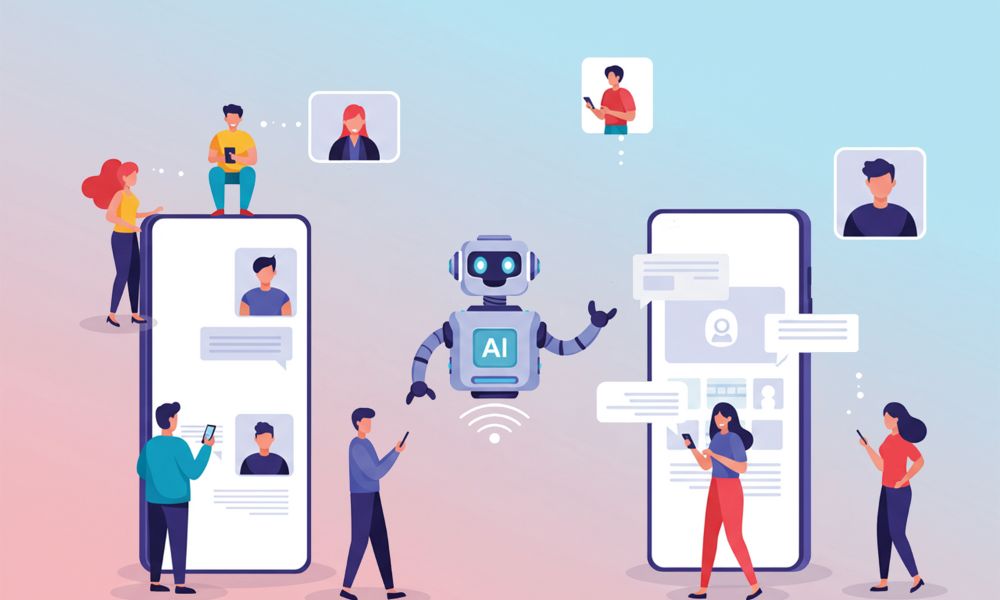
AI is now important for MBA students in the same way spreadsheets, presentations, and data analysis became essential in earlier business eras: not because every manager needs to become an engineer, but because every manager now needs to make better decisions in AI-shaped organizations.
That matters for two reasons. First, AI is already being used across core business functions, not just in tech teams. McKinsey’s 2025 global survey found that 88% of respondents say their organizations use AI in at least one business function. Second, employers increasingly expect business graduates to combine strategic judgment with AI and technology skills, while still valuing leadership, problem-solving, and communication. Source
For MBA students, the real question is no longer “Should I learn AI?” It is “How much do I need to know to stay useful, credible, and competitive?”
The short answer: AI is becoming a core management skill
MBA students do not need to master model architecture or advanced coding to benefit from AI.
They do need to understand:
- what AI can and cannot do
- where it creates business value
- how to ask better questions with data and AI tools
- how to evaluate risk, bias, privacy, and reliability
- how to combine AI outputs with human judgment
That mix is what makes AI relevant for future managers. Business schools are also moving in this direction, with many institutions beginning to integrate AI across curriculum, faculty development, and student learning rather than treating it as a side topic. Source
Why AI matters for MBA students now
1. AI is already part of mainstream business work
AI is no longer a niche capability. It is being used in marketing, operations, customer service, finance, analytics, product development, and knowledge work.
For MBA students, that changes the baseline. Employers increasingly expect managers to understand how AI fits into process improvement, growth strategy, and decision-making. Source
2. Employers expect a blend of AI skills and human skills
The strongest MBA candidates will not be those who only know AI tools. They will be the ones who know when to use them, how to question the output, and how to connect it to business goals.
The World Economic Forum’s Future of Jobs Report 2025 highlights AI and big data as fast-growing skills, while still emphasizing the importance of leadership, creative thinking, resilience, and collaboration. Source
That is where an MBA should add value: translating technology into business action.
3. AI improves the quality and speed of decisions
Managers deal with large volumes of information: sales data, customer feedback, operational metrics, market research, financial trends, hiring signals, and competitive intelligence.
AI can help summarize data, identify patterns, forecast outcomes, and automate repetitive analysis. That does not replace judgment. It changes the quality of inputs available before a decision is made.
A student who can use AI to structure a market analysis, test assumptions, or spot operational bottlenecks will usually work faster than someone doing everything manually.
4. AI matters across MBA specializations
One of the biggest mistakes students make is assuming AI is only useful in analytics or consulting. In reality, it shows up across nearly every management track.
Marketing
- audience segmentation
- campaign analysis
- content ideation
- personalization
- customer churn prediction
- social listening and sentiment analysis
Finance
- anomaly detection
- forecasting support
- credit and risk modeling
- fraud monitoring
- faster review of financial documents
Operations and Supply Chain
- demand forecasting
- procurement planning
- route and logistics optimization
- inventory decisions
- predictive maintenance support
HR and People Management
- resume screening support
- skills mapping
- employee sentiment analysis
- workforce planning
- personalized learning pathways
Entrepreneurship
- market research
- lean content creation
- customer support automation
- pricing and growth experiments
- prototype testing and faster validation
What MBA students should actually learn about AI
The most useful AI skill set for MBA students is not “learn everything.” It is “learn the parts that improve managerial effectiveness.”
A practical AI skill roadmap for MBA students
1. AI literacy
Start with the basics:
- what AI is
- difference between traditional analytics, machine learning, and generative AI
- structured vs. unstructured data
- common use cases in business
- major limitations such as hallucinations, bias, weak context, and data quality issues
OECD research supports the need for broad AI literacy in education and workforce development. Source
2. Prompting and workflow design
Prompting is not just “asking better questions.” It is learning how to:
- define the task clearly
- provide context
- specify output format
- test assumptions
- compare responses
- refine results with follow-up prompts
For MBA students, this matters in research summaries, interview prep, presentation drafting, business case analysis, and idea generation.
3. Data interpretation
AI can surface patterns. Managers still need to interpret them.
Students should be comfortable with:
- dashboards
- charts
- basic descriptive statistics
- business KPIs
- forecasting concepts
- identifying weak or biased data
- explaining insights in plain business language
4. AI governance, ethics, and risk
This is where future managers can stand out.
A useful MBA-level understanding includes:
- privacy and confidentiality risks
- bias and fairness issues
- reliability and verification
- copyright and data ownership concerns
- model transparency limits
- responsible use in customer-facing or employee-facing decisions
As AI scales, organizations are also placing more emphasis on governance and leadership oversight. Source
5. Change management and communication
AI adoption often fails for organizational reasons, not technical ones.
MBA students should learn how to:
- explain AI in business terms
- win stakeholder buy-in
- redesign workflows
- train teams on new tools
- set realistic expectations
- measure outcomes rather than hype
That combination of strategy, communication, and implementation is what turns AI knowledge into management value.
Skills MBA students should prioritize first
| Skill | Why it matters | Priority level |
|---|---|---|
| AI literacy | Helps you understand use cases, limits, and terminology | High |
| Prompting | Improves output quality in daily academic and work tasks | High |
| Data interpretation | Turns AI outputs into business decisions | High |
| Critical thinking | Helps you verify answers and avoid overtrusting tools | High |
| Ethics and governance | Essential for responsible managerial use | High |
| Basic automation mindset | Useful for workflow improvement and productivity | Medium |
| Technical depth beyond basics | Helpful, but not essential for most MBA students | Medium |
AI tools MBA students can use productively
The best tools depend on the task. A smart approach is to learn categories, not just brand names.
1. Generative AI assistants
Useful for:
- brainstorming
- summarizing articles
- drafting reports
- preparing interview answers
- generating presentation outlines
- converting rough notes into structured output
2. Spreadsheet and analytics tools with AI features
Useful for:
- cleaning data
- spotting trends
- creating charts
- exploring scenarios
- speeding up analysis
3. BI and dashboard tools
Useful for:
- management reporting
- KPI tracking
- business storytelling with data
- turning raw numbers into executive summaries
4. Marketing and CRM tools with AI
Useful for:
- campaign optimization
- lead scoring
- email drafting
- customer segmentation
- performance insights
5. Research and note-taking tools
Useful for:
- organizing sources
- extracting key points
- speeding up literature reviews
- improving project preparation
The goal is not to collect dozens of tools. It is to become good at 3 to 5 tools you can actually apply in coursework, internships, and job interviews.
Common mistakes MBA students should avoid
Treating AI as a shortcut instead of a skill
Using AI to finish assignments faster is not the same as learning how to think better with AI.
Overtrusting outputs
AI can sound confident and still be wrong. Students should verify numbers, claims, case examples, and citations.
Ignoring ethics and confidentiality
Uploading private business data, internship documents, or sensitive personal information into public tools can create risk.
Focusing only on tools, not outcomes
Employers care less about whether you tried a trendy app and more about whether you can improve research, analysis, communication, or decision-making.
Assuming AI replaces managerial judgment
It does not. Recruiter research continues to show that employers value judgment, problem-solving, and adaptability alongside technology skills. Source
How MBA students can start learning AI without becoming technical experts
Here is a practical path that works for most students.
Step 1: Build basic AI literacy
Spend time understanding key concepts, use cases, and limitations before worrying about advanced tools.
Step 2: Learn through MBA tasks you already do
Use AI to:
- summarize readings
- draft first versions of case analyses
- prepare interview questions
- structure market research
- improve slide decks
- compare strategic options
Step 3: Pair AI with data skills
Learn at least one analytics workflow involving spreadsheets, dashboards, or BI tools.
Step 4: Create small proof-of-work projects
Examples:
- build a dashboard from public business data
- create a customer persona analysis using AI plus market research
- compare manual vs. AI-assisted workflow for a marketing task
- write a short memo on AI risks in HR or finance
Step 5: Learn to explain your work
In interviews, be ready to say:
- what tool you used
- why you used it
- what business problem it helped solve
- what limitations you found
- how you verified the result
That is far more impressive than simply saying, “I know ChatGPT.”
Is AI important for MBA students who are not targeting tech jobs?
Yes.
Even if you plan to work in consulting, brand management, operations, banking, HR, or general management, AI is becoming part of everyday workflows and strategic planning. The managers who stay valuable will be the ones who can evaluate AI opportunities without being misled by hype.
You do not need to compete with data scientists. You do need enough fluency to collaborate with them, ask better questions, interpret outputs, and make sound business decisions.
Will AI replace managers?
Not in the simple way many people assume.
AI is more likely to change what managers spend time doing. Routine analysis, drafting, reporting, and repetitive coordination may shrink. Work involving prioritization, judgment, persuasion, leadership, ethics, stakeholder management, and cross-functional decisions becomes even more important. Source
The future of AI in MBA programs
Business education is moving from “Should we teach AI?” to “How should AI be integrated responsibly?”
Business schools are increasingly treating AI as a strategic issue that touches curriculum, assessment, governance, and faculty readiness, not just as an elective topic. That is a strong signal for MBA students: AI literacy is likely to become a standard expectation, not a niche advantage. Source
Students who build AI capability now will be better prepared for:
- AI-influenced hiring processes
- AI-enabled workplaces
- cross-functional management roles
- faster decision environments
- growing expectations around governance and responsible use
Final takeaway
AI is important for MBA students because modern management increasingly depends on working with data, automation, and intelligent systems.
You do not need to become a programmer to benefit from AI. You do need to become an informed, skeptical, practical user of it.
For most MBA students, the winning formula is simple:
- learn the basics of how AI works
- use it in real academic and business tasks
- strengthen your data and communication skills
- understand ethical and governance risks
- keep human judgment at the center
That is what will make AI a career advantage rather than just another buzzword on a resume.
Frequently Asked Questions
Do MBA students need coding to learn AI?
No. Coding can help, but most MBA students can get strong value from AI literacy, prompting, analytics, dashboard interpretation, and responsible-use knowledge without becoming developers.
Which MBA specialization benefits most from AI?
All major specializations benefit. Marketing, finance, operations, HR, consulting, and entrepreneurship all use AI in different ways. The use case changes, but the importance does not.
Is AI more important than soft skills for MBA students?
No. The strongest profile is a combination of AI fluency and human skills such as judgment, communication, leadership, and problem-solving. Source
What AI tools should MBA students start with?
Start with one generative AI assistant, one spreadsheet workflow, and one BI or dashboard tool. It is better to use a few tools well than to know many tools superficially.
Can AI help MBA students get better jobs?
It can improve employability when students can show practical use of AI in research, analysis, reporting, and decision-making. Source
Is AI just a trend in business education?
No. Current signs suggest it is becoming embedded more deeply in business education and workplace expectations, not disappearing as a short-term trend. Source
References
- McKinsey — The state of AI in 2025: Agents, innovation, and transformation
- McKinsey — The State of AI: Global survey
- World Economic Forum — The Future of Jobs Report 2025
- GMAC — Corporate Recruiters Survey
- AACSB — A Framework for AI in Business Education
- OECD — Empowering Learners for the Age of AI

- Everything you should know about the Case study - October 3, 2026
- Top Ten Online Data Analytics Courses in the USA - October 2, 2026
- Different Types of Organizational Structures with Examples - September 30, 2026